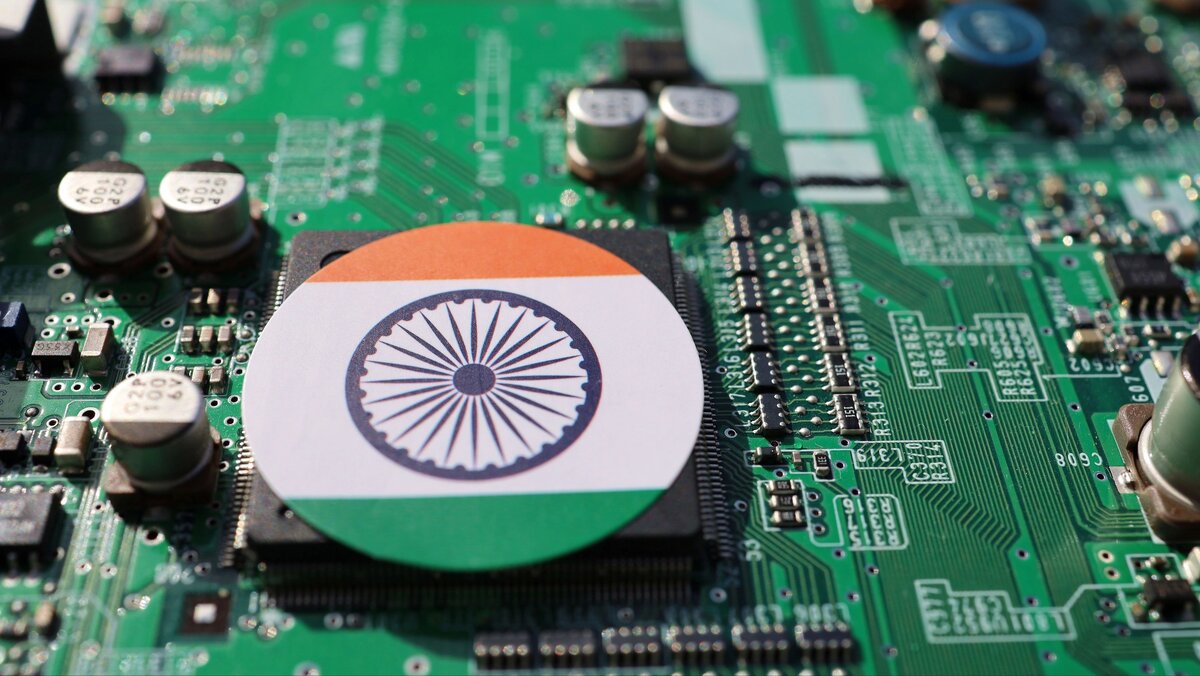
The Government of India has officially authorized the construction of the country’s first mega semiconductor manufacturing plant in the industrial area of Dholera, Gujarat. This ambitious $10 billion project will be a key element of the India Semiconductor Mission program aimed at developing the nation’s microelectronics industry. The project is being implemented by a consortium involving India’s Tata Electronics, Taiwan’s TSMC (as technology partner) and Japan’s Specialty Equipment Corporation.
The enterprise will specialize in the production of 28-nanometer chips, demanded in automotive electronics, home appliances, telecommunications equipment and industrial control systems. The production capacity will be up to 50,000 silicon wafers monthly. Government support includes a 50% subsidy on capital expenditures under the Production Linked Incentive (PLI) scheme, tax vacations for the first 10 years of operation and guarantees of infrastructure support.
The economic significance of the project cannot be overemphasized. India currently imports 95% of its semiconductors worth $24 billion a year, and the new plant will be able to cover up to 20% of domestic demand. In addition to reducing import dependence, the project will create 5,000 highly skilled jobs and another 15,000 related positions. Special attention is being paid to the development of the R&D ecosystem – an innovation cluster with leading Indian Institutes of Technology (IITs) and international partners is planned to be created around the plant.
According to the implementation schedule, the plant is expected to be completed by 2025, with commissioning and test runs scheduled for 2026 and full production capacity expected in 2027. This project will be a major test for the Indian technology industry and could be the beginning of the country’s transformation into a global chip manufacturing center. According to experts, the success of the enterprise will largely depend on the effectiveness of training qualified personnel and the ability to adapt advanced manufacturing technologies to local conditions. The realization of this project can fundamentally change India’s position in the global semiconductor supply chain and strengthen the country’s technological sovereignty.